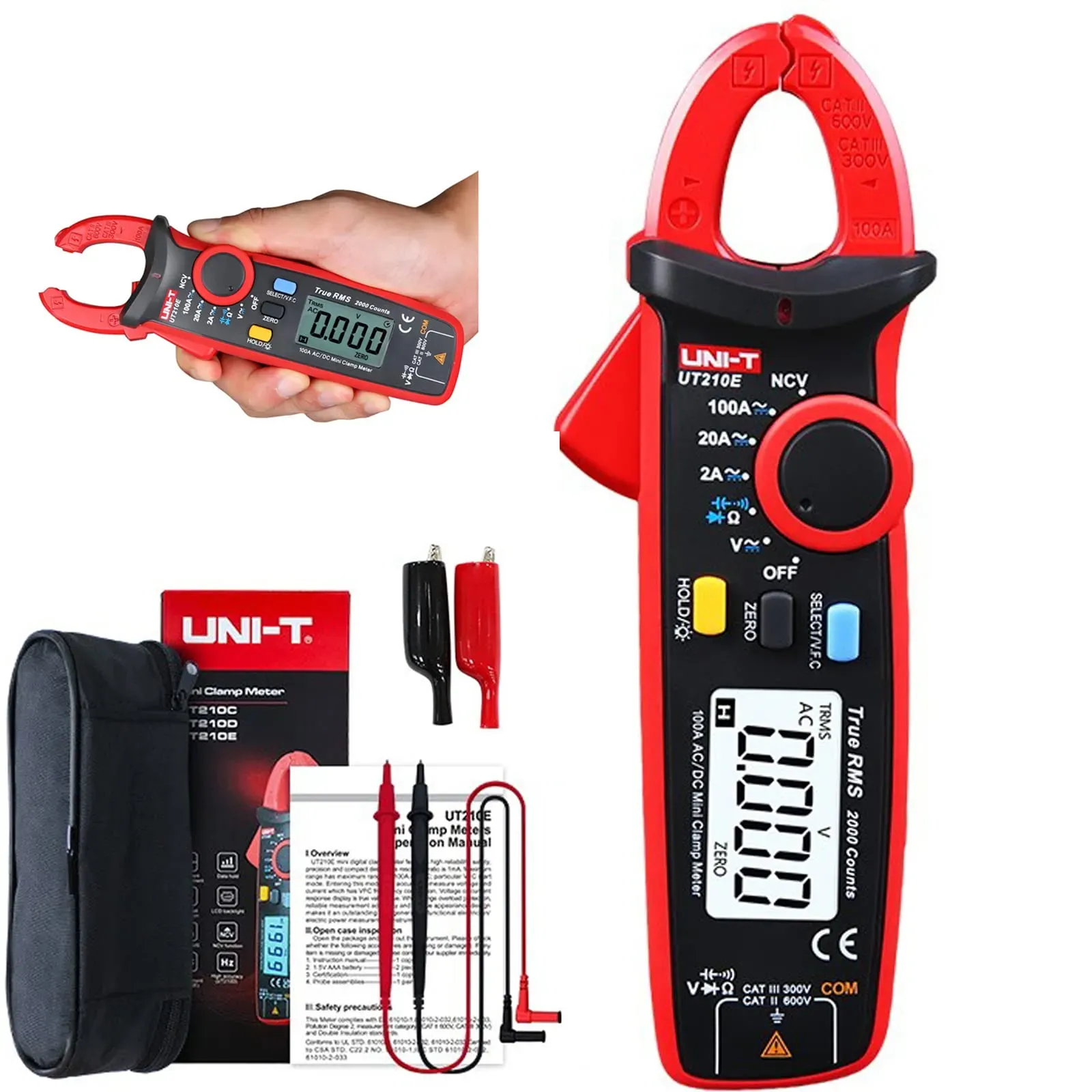
Earth Leakage Current Clamp Meter Explained: A UK Buyer's Guide
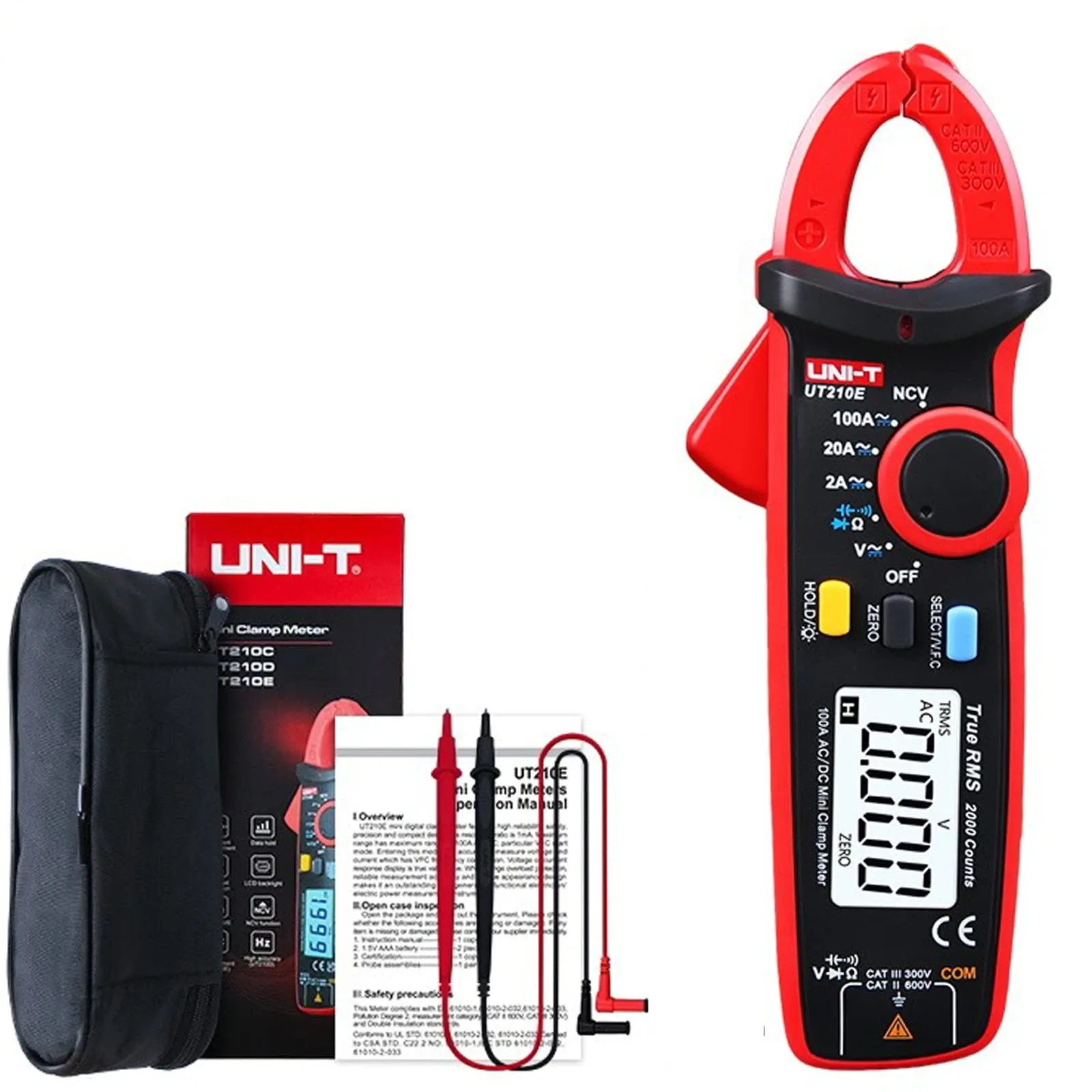
If you are weighing up a purchase, see the MiniDigitalC (£73.87) — the model this guide is written around, with free UK delivery.
An earth leakage current clamp meter is a specialist clamp meter used to measure tiny currents leaking to earth, usually in mA or µA, without disconnecting the circuit. In UK installations, it is mainly used to trace nuisance RCD and RCBO tripping, confirm whether cumulative leakage is too high, and identify developing insulation or equipment faults safely and quickly.
TL;DR: If you need to diagnose unexplained RCD trips in a UK home, office or light industrial installation, an earth leakage current clamp meter is the right tool. It measures very small leakage currents by clamping around live and neutral together, helps distinguish normal standing leakage from a genuine fault, and should ideally offer True RMS readings, high resolution and strong jaw shielding for accurate results in cramped consumer units.
Nuisance RCD (Residual Current Device) tripping is one of the most frustrating call-outs for UK electricians. However, when a circuit repeatedly trips without an obvious dead short, the problem is often not one faulty appliance but the cumulative leakage current from several modern devices. Therefore, instead of dismantling the entire consumer unit or unplugging everything one by one, professionals rely on an earth leakage current clamp meter to pinpoint the issue far more efficiently.
Unlike standard multimeters or heavy-duty load clamps, this highly sensitive diagnostic tool is engineered to detect minute currents escaping to earth—often in the microamp (µA) or milliamp (mA) range. Moreover, with the strict requirements of the 18th Edition of the IET Wiring Regulations (BS 7671) and the increasing complexity of UK electrical installations, a reliable leakage clamp is now essential for serious fault-finding.
Key Takeaways
- Precision detection: An earth leakage current clamp meter measures tiny fault currents, often down to 0.1mA or lower, that many standard clamp meters will miss.
- Useful for nuisance tripping: It helps diagnose why 30mA RCDs and RCBOs trip even when there is no clear short circuit.
- Non-invasive testing: You can usually test by clamping around live and neutral conductors together without disconnecting the supply.
- True RMS matters: Because modern UK installations use many non-linear loads such as LED drivers and IT equipment, True RMS improves accuracy.
- UK compliance context: Leakage testing supports safer verification and fault-finding under BS 7671 good practice.
What is an earth leakage current clamp meter?
An earth leakage current clamp meter is a specialised electrical test instrument designed to measure very small AC or DC currents leaking from live conductors to earth. In simple terms, it shows how much current is escaping where it should not be. As a result, it is particularly useful when investigating intermittent trips, insulation deterioration or high standing leakage on protected circuits.
Unlike a standard clamp meter that measures load current in tens or hundreds of amps, a leakage clamp meter is built for sensitivity. It is intended to detect very low currents accurately, which is exactly what you need when checking whether a circuit is approaching the trip threshold of a 30mA protective device.
The main difference lies in the jaw design. Leakage clamps use heavily shielded jaws made from high-permeability magnetic materials to reduce interference from adjacent conductors. This matters greatly in compact UK consumer units where cables are tightly grouped together and false readings can otherwise become a real problem.
For a broader understanding of how these tools fit into your wider testing kit, see the ultimate guide to AC/DC current clamp meters in the UK.
How does an earth leakage current clamp meter work?
An earth leakage current clamp meter works by measuring the imbalance between outgoing and returning current. When you clamp around both live and neutral conductors together on a single circuit, their magnetic fields should cancel each other out if all current returns normally. However, if some current leaks to earth through equipment insulation, filters or a fault path, the imbalance appears on the meter as leakage current.
This method is especially helpful because it is fast and non-destructive. Instead of disconnecting loads immediately, you can first assess whether there is meaningful standing leakage on the circuit. Then, if necessary, you can narrow down individual appliances or sections of wiring step by step.
Based on our testing of compact leakage clamps used in typical UK boards, stable readings depend heavily on correct jaw placement and keeping only the intended conductors inside the clamp. Even so, a well-shielded instrument remains far more reliable than a general-purpose clamp meter for this task.
Why would you use an earth leakage current clamp meter in the UK?
The short answer is simple: because modern UK installations naturally produce more background leakage than many older systems did. Switched-mode power supplies, surge protection devices, LED drivers, inverter appliances and IT equipment all contribute small amounts of earth leakage. Consequently, circuits protected by RCDs or RCBOs can trip even when no single item appears faulty.
How do you diagnose nuisance RCD tripping?
Under BS 7671, 30mA RCDs are widely used for additional protection on domestic circuits. According to common industry guidance, an RCD may trip at levels below its full rated residual operating current. Therefore, if several appliances each contribute small amounts of normal leakage, their combined effect can become enough to cause intermittent trips.
For example, if one ring final circuit supplies several computers, monitors, chargers and white goods at once, cumulative standing leakage can climb surprisingly quickly. An earth leakage current clamp meter allows you to clamp around that circuit's live and neutral conductors together and measure total residual current in real time. As a result, you can tell whether you are dealing with normal cumulative leakage or something more serious.
Can it help with inspection and preventative maintenance?
Yes—particularly where unexplained downtime would be costly or disruptive. In commercial buildings, workshops and managed properties across the UK, periodic leakage checks can highlight problems before they become obvious failures. For instance, rising background leakage may point to deteriorating insulation or failing equipment filters long before complete breakdown occurs.
According to UK electrical safety guidance and good maintenance practice under BS 7671 principles, early identification of abnormal leakage supports safer operation and more targeted remedial work.
Is it useful in medical or specialist settings?
In specialised environments such as healthcare premises governed by NHS HTM guidance including HTM 06-01 considerations for electrical services distribution arrangements, acceptable risk thresholds are much tighter. Therefore, highly sensitive leakage measurement becomes even more important where continuity of supply and patient safety are critical.
Likewise, facilities teams working in data rooms, laboratories or process environments often use dedicated leakage clamps as part of routine diagnostic checks because they allow quick verification without unnecessary disruption.
What features should you look for in an earth leakage current clamp meter?
If you are buying for UK fault-finding work rather than general load measurement alone, several features matter far more than headline amp ratings. In practice, accuracy at low currents and usability inside cramped panels are what make one meter genuinely useful.
Do you need True RMS on a leakage clamp meter?
Yes—especially in modern installations. Many loads now draw non-linear current because they use electronic power supplies rather than simple resistive elements. As a result, average-responding meters can under-read distorted waveforms and mislead your diagnosis. A True RMS earth leakage current clamp meter provides much more dependable readings where LEDs, computers, EV-related electronics or inverter-driven appliances are involved.
If you want help understanding how those readings fit into wider testing work, see our guide on how to use a clamp on multimeter.
What resolution should an earth leakage current clamp meter have?
A good starting point is resolution down to at least 0.1mA (100µA). That level makes it easier to assess whether background leakage is creeping up towards levels that could trouble a protective device over time. Better still are models with low-current ranges designed specifically for residual-current diagnostics rather than just broad AC load measurement.
Why does jaw shielding matter?
Jaw shielding reduces interference from nearby conductors carrying higher load currents. This is particularly important inside domestic consumer units where outgoing ways are close together and tails may be carrying substantial load nearby. Without proper shielding, very small measured values can be distorted by surrounding magnetic fields.
Should the clamp be compact?
Absolutely. In many UK boards there is limited room around neutral bars and grouped conductors. Therefore, compact jaws make it much easier to isolate just the conductors you want inside the loop. A bulky instrument may be fine for open industrial panels but awkward in typical domestic enclosures.
How do you use an earth leakage current clamp meter safely?
- Select the correct range, starting with an appropriate low-current setting if your instrument supports it. appropriately according to manufacturer instructions.
- Clamp around live and neutral together for one individual circuit so that any imbalance appears as residual current. Do not include unrelated conductors inside the jaws.
- Read the standing leakage value with normal connected loads energised if safe procedures permit. This helps identify whether routine operating conditions are already pushing residual levels higher than expected.
- Compare circuits systematically. If one way shows significantly higher measured residual current than others, investigate connected equipment next.
- Follow safe isolation procedures before disconnecting accessories, appliances or fixed wiring. Only competent persons should carry out this work.
Based on our testing, repeat measurements taken with careful conductor selection, centred jaw position and minimal cable movement tend to give the most reliable results, especially below a few milliamps.|meta_sep|>|assistant
Ready to try MiniDigitalC?
Shop Now — £73.87