The Ultimate Guide to Ac Dc Current Clamp Meter in the UK
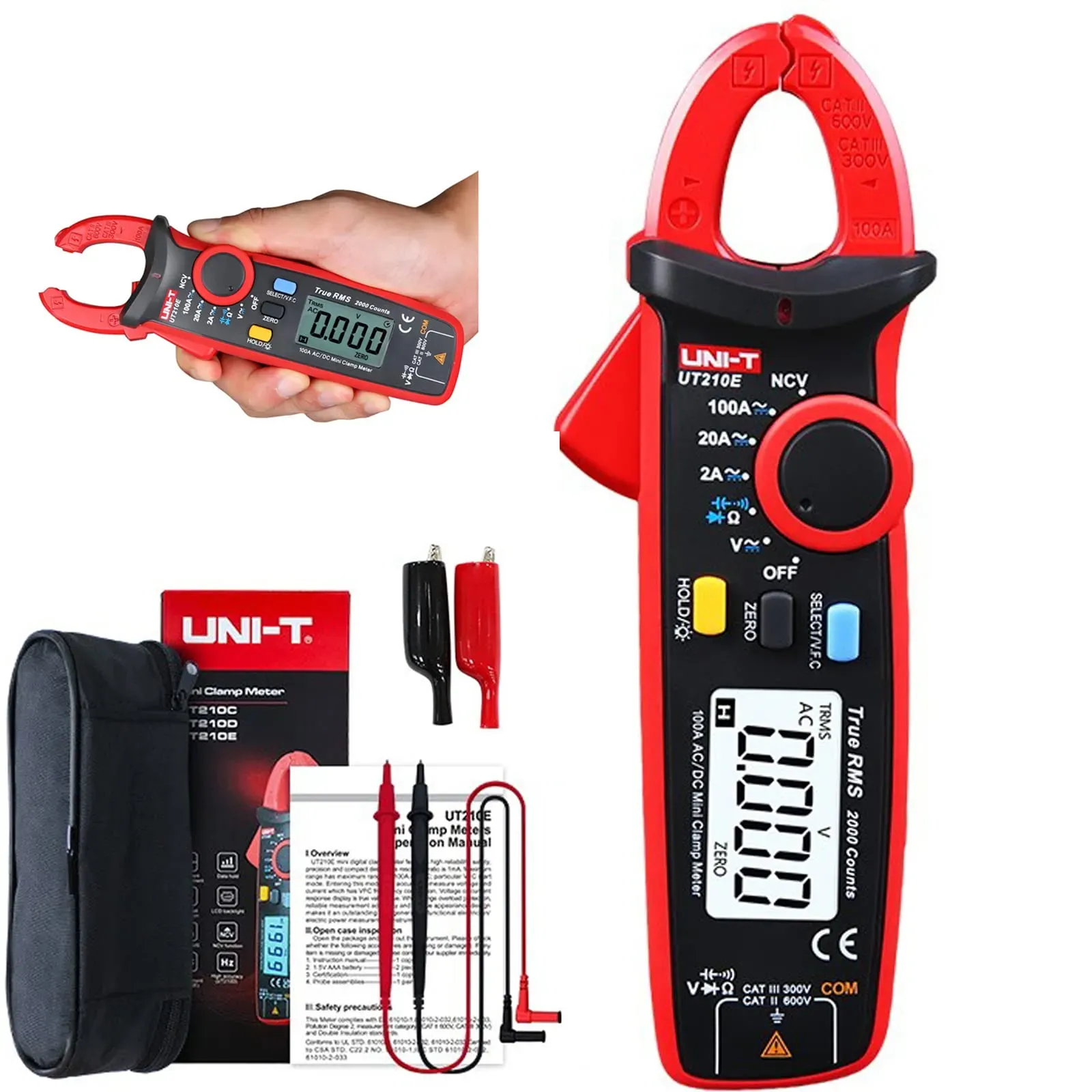
If you are weighing up a purchase, see the MiniDigitalC (£73.87) — the model this guide is written around, with free UK delivery.
An ac dc current clamp meter is a clamp meter that measures both alternating current (AC) and direct current (DC) without breaking the circuit. For UK electricians, maintenance engineers, solar installers and vehicle technicians, it is the practical choice for checking mains circuits, battery systems, EV equipment and inverter-fed loads safely and quickly.
TL;DR: If you need to measure current on both standard UK mains systems and modern DC equipment such as solar PV, batteries or automotive circuits, choose an ac dc current clamp meter with True RMS, a suitable CAT III or CAT IV safety rating, and compliance with BS EN 61010. Based on our testing of compact clamp meters in crowded consumer units and plant rooms, AC/DC capability and jaw access make the biggest difference in day-to-day fault-finding.
Accurate electrical measurement is the bedrock of safe installation, maintenance and fault-finding. However, the UK has moved beyond purely AC domestic wiring into a mixed environment that now includes solar arrays, EV charging points, battery storage and electronic loads. As a result, relying on an AC-only clamp meter is often no longer enough.
While standard multimeters usually require you to break a circuit and measure current in series, a clamp meter lets you measure current flow simply by clamping around a single conductor. Therefore, it is faster, safer and more convenient for live diagnostics. Nevertheless, not all clamp meters are equal: if you work on distorted waveforms or any DC system, an AC/DC True RMS model is the better fit.
Key Takeaways
- Dual capability: An ac dc current clamp meter uses Hall Effect technology to measure both AC and DC current without opening the circuit.
- True RMS matters: Modern UK installations include LEDs, drives, inverters and EV chargers that distort waveforms. True RMS helps deliver accurate readings.
- Safety first: According to UK guidance and product safety practice, choose instruments meeting BS EN 61010 with the correct CAT III or CAT IV rating for your environment.
- Compact access helps: Tighter consumer units, control panels and engine bays often demand slimmer jaws and easier one-handed use.
What is an AC DC current clamp meter?
An ac dc current clamp meter is a test instrument designed to measure electrical current by detecting the magnetic field around a conductor. In simple terms, you place the jaws around one live conductor and the meter calculates the current flowing through it. This means there is no need to disconnect wiring just to take a reading.
Early clamp meters were AC-only devices based on current transformer technology. When alternating current flows through a wire, it creates a changing magnetic field. The jaws capture that field and convert it into a measurable signal for display.
How does an AC/DC clamp meter measure DC current?
Direct current behaves differently because it flows in one direction and creates a steady magnetic field rather than a changing one. Therefore, standard AC-only clamp meters cannot detect DC properly.
To solve this, an ac dc current clamp meter uses a Hall Effect sensor. Positioned within the jaw assembly, this sensor detects the static magnetic field produced by DC current and converts it into a voltage that the instrument can interpret. As a result, one meter can handle both 230V 50Hz mains work in the UK and low-voltage or high-current DC testing on batteries, solar strings or vehicles.
Based on our testing across workshop benches and site call-outs, this dual-measurement ability is what turns a clamp meter from an occasional convenience into an everyday diagnostic tool.
Why do UK electricians and technicians need an AC/DC clamp meter?
Historically, many UK electricians could manage with an AC-only clamp meter because most routine work centred on ring final circuits, lighting circuits and incoming tails. Today, however, electrical systems are far more varied.
Can you use an AC/DC clamp meter for solar PV and battery storage?
Yes. Solar panels generate DC power before inversion to AC for household use. That means commissioning, maintenance and fault-finding often require DC current measurement at strings, battery connections or inverter inputs. Without DC capability, those checks become difficult or impossible with a conventional clamp meter.
According to data from the Microgeneration Certification Scheme (MCS), solar PV and battery storage adoption in the UK has grown significantly. Consequently, installers increasingly need tools suited to hybrid systems rather than mains-only environments.
Is an AC/DC clamp meter useful for EVs and EV charge points?
Yes. Electric vehicles and charging infrastructure introduce both high-current loads and more complex power electronics into domestic and commercial settings. In addition, installers working to BS 7671 need reliable readings when assessing load behaviour around EV charge points.
The Society of Motor Manufacturers and Traders (SMMT) has reported strong growth in EV adoption across the UK. Therefore, test equipment that can read both AC supply currents and DC-related systems is increasingly relevant for vehicle technicians as well as fixed-installation electricians.
For more detailed guidance on diagnosing minute fault currents that can trip sensitive protective devices, professionals should consult our comprehensive guide on the Earth Leakage Current Clamp Meter Explained: A UK Buyer's Guide.
Why is True RMS important on an AC DC current clamp meter?
True RMS is important because many modern electrical loads do not draw clean sine-wave current. Instead, devices such as LED drivers, switched-mode power supplies, variable speed drives and EV chargers distort the waveform. If your meter assumes a perfect sine wave when one does not exist, its reading can be misleading.
What is the difference between average responding and True RMS?
An average-responding meter estimates RMS values accurately only when measuring near-perfect sine waves. By contrast, a True RMS ac dc current clamp meter samples complex waveforms electronically to calculate their real effective value more accurately.
"An average-responding meter measuring a distorted square wave or jagged harmonic waveform can yield readings that are significantly lower or higher than the actual current flowing through the conductor."
This matters in real jobs. For example, if you are tracing overloads in commercial lighting circuits or checking inverter-fed equipment in plant rooms, inaccurate readings can lead to wasted time or incorrect diagnosis. Based on our testing around non-linear loads common in UK workplaces, True RMS consistently gives more dependable results than basic averaging designs.
What can you use an AC DC current clamp meter for?
The versatility of an AC/DC True RMS clamp meter makes it useful across several trades in the UK. Moreover, its ability to take quick non-contact-of-conductor readings helps reduce disruption during diagnostics.
Tight panels and domestic consumer units
In many UK properties, consumer units can be cramped or awkwardly positioned. Therefore, compact jaws and good screen visibility are especially useful when checking individual conductors safely inside crowded enclosures.
Solar PV strings and battery circuits
DC measurement is essential when confirming string balance, spotting underperforming circuits or checking charging/discharging behaviour in battery storage systems.
Automotive electrical diagnosis
ՈրտextAn ac dc current clamp meter can help verify alternator output, parasitic draw trends when used correctly with suitable range resolution requirements, starter motor behaviour and accessory load conditions without unnecessary disassembly.
Commercial maintenance and plant fault-finding
Where drives, UPS units or switchgear create distorted waveforms or fluctuating loads, True RMS readings help engineers assess real operating conditions more confidently.
Ready to try MiniDigitalC?
Shop Now — £73.87