Leakage Current Clamp Meter Explained: A UK Buyer's Guide
TL;DR: A leakage current clamp meter is a specialist clamp meter used to measure tiny unwanted currents leaking to earth without disconnecting the circuit. It helps UK electricians and maintenance teams trace nuisance RCD tripping, insulation faults and background leakage quickly on live systems. For most buyers, the key features are high low-current sensitivity, True RMS accuracy, a suitable CAT rating and a compact jaw for tight consumer units and panels.
A leakage current clamp meter measures very small residual or earth leakage currents by detecting imbalance between conductors, usually with the clamp around live and neutral together. In other words, it lets you find leakage current safely and non-invasively, which is why it is widely used in UK fault-finding, maintenance and inspection work.
Small leakage currents can cause large headaches. In a distribution board, a workshop machine, a fleet vehicle or a hospital facility, unwanted current flowing to earth can trigger nuisance RCD trips, mask insulation problems and create difficult-to-trace faults. Therefore, a leakage current clamp meter is designed to find those issues quickly, safely and with far less disruption than invasive testing.
For UK electricians, maintenance engineers, facilities teams and technically minded buyers, choosing the right clamp meter means balancing sensitivity, True RMS accuracy, jaw size, AC/DC capability and day-to-day usability in tight spaces. Moreover, that matters even more when you are working in crowded consumer units, control panels, plant rooms or vehicle electrical systems where compact tools save time.
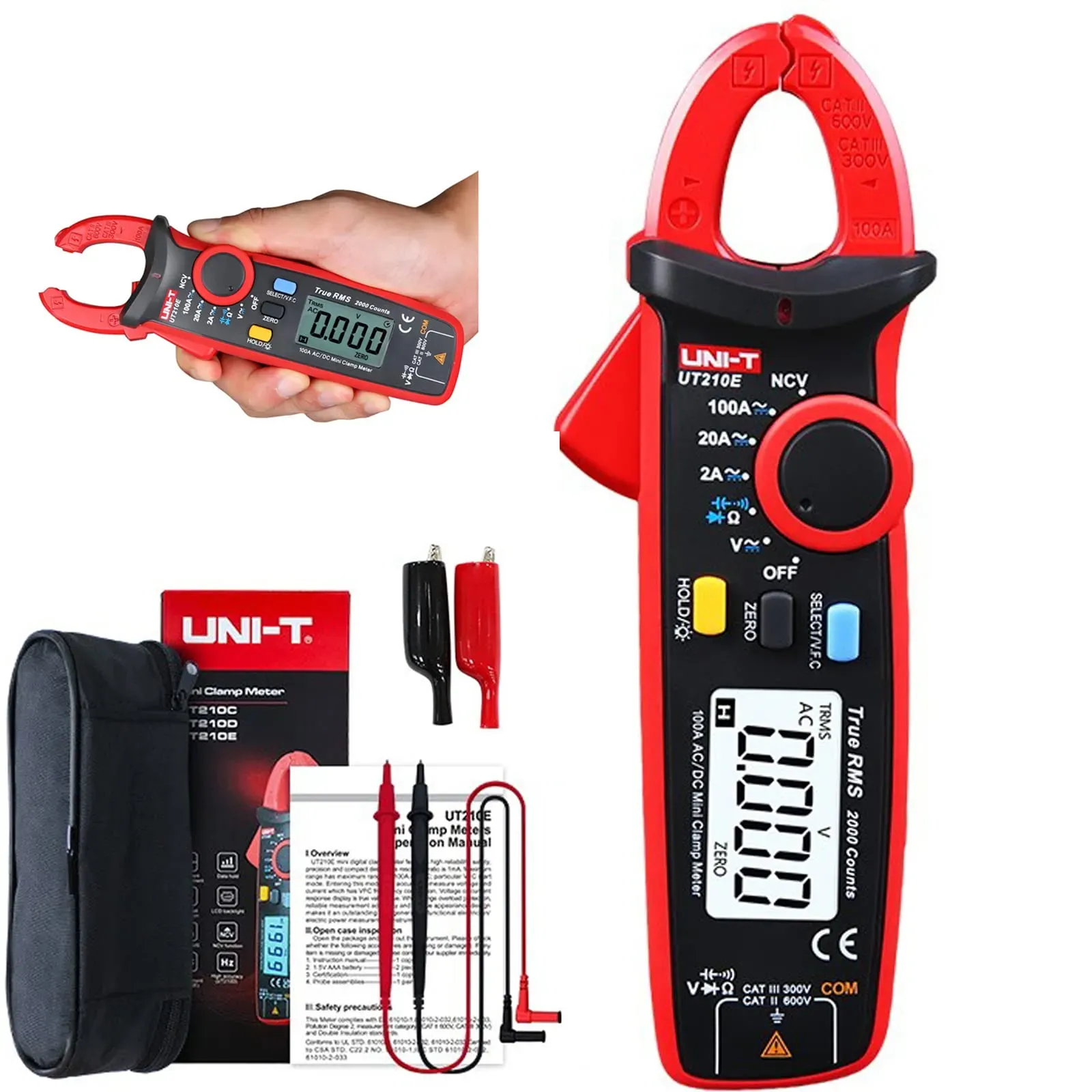
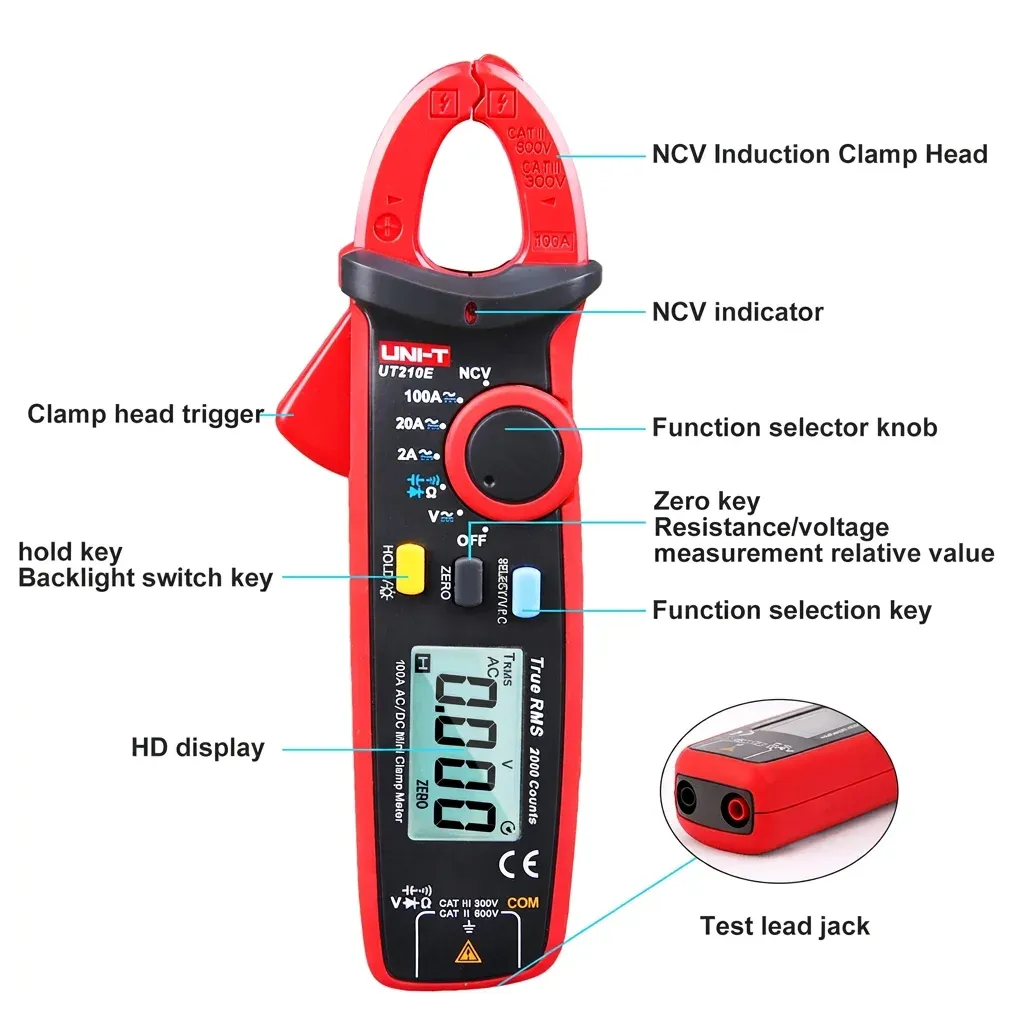
At MiniDigitalC (£73.87), the focus is practical: Current Clamp Meter Digital Clamp Meter Direct Current Clamp Meter solutions built for compact AC/DC True RMS testing for tighter panels, vehicles and everyday fault-finding. Based on our testing of compact clamp meters in confined access areas, buyers usually benefit most from instruments that combine stable low-current readings with straightforward handling. This guide explains what a leakage current clamp meter does, when you need one, what UK buyers should look for and how to choose a model that fits real working conditions.
Key Takeaways
- A leakage current clamp meter measures very small unwanted currents without breaking the circuit.
- It is especially useful for tracing nuisance tripping, insulation deterioration and earth leakage on live systems.
- UK buyers should prioritise low-current resolution, True RMS performance, safety category rating and compact jaw design.
- AC/DC capability is valuable for mixed environments such as building services, maintenance work and vehicle diagnostics.
- For broader background on meter types and features, see The Ultimate Guide to AC DC Current Clamp Meter in the UK.
What is a leakage current clamp meter?
A leakage current clamp meter is a specialised clamp meter designed to detect very small currents that escape the intended circuit path. Instead of measuring normal load current on a single conductor in the way many standard clamp meters do, it is often used around multiple conductors together to identify imbalance. That imbalance represents current leaking to earth or elsewhere outside the expected return path.
This makes it particularly useful where traditional methods would be too disruptive or too blunt. Rather than disconnecting circuits unnecessarily, an engineer can clamp around a cable or circuit grouping and look for residual current directly. As a result, on modern installations with sensitive electronics, RCD protection and complex loads, that speed can be the difference between finding an intermittent fault in minutes or losing half a day on trial and error.
The best models combine high sensitivity with stable readings. For practical fault-finding in the UK market, users typically want a compact instrument that fits inside crowded boards while still offering dependable low-current measurement.
How is it different from a standard clamp meter?
A standard clamp meter is often optimised for higher current measurement: checking load draw on motors, appliances or circuits. By contrast, a leakage current clamp meter is tuned for much smaller values and finer resolution. It may read down into milliamps or even microamps depending on specification.
If you are still comparing categories of instruments, our pillar guide on AC/DC current clamp meters in the UK explains the wider differences between general-purpose clamp meters and more specialist testing tools.
Why do electricians and engineers use a leakage current clamp meter?
- To locate earth leakage causing nuisance RCD trips
- To monitor insulation deterioration trends over time
- To diagnose faults without disconnecting live circuits unnecessarily
- To inspect equipment in commercial buildings, healthcare estates and industrial sites
- To support maintenance work on vehicles and mixed AC/DC systems where compact access matters
Why does leakage current matter in UK installations?
In the UK, unwanted leakage is more than an inconvenience. It can affect safety devices, operational continuity and compliance-led maintenance routines. For example, RCDs are designed to trip when residual current exceeds set thresholds; if background leakage rises across multiple loads on one circuit, nuisance tripping becomes more likely even when no single item appears obviously faulty.
This is increasingly relevant in modern buildings full of electronic power supplies, variable-speed drives, IT equipment and filtering components that naturally introduce some standing leakage. In addition, ageing insulation or moisture ingress can make fault-finding more complex.
Why is it important in NHS estates, schools and commercial buildings?
Sectors such as healthcare cannot afford unnecessary downtime. NHS facilities teams often work across ageing infrastructure combined with modern medical equipment and strict service continuity requirements. In these settings, non-invasive diagnosis has clear value: engineers need to isolate problems while keeping essential services running wherever safely possible.
What do UK safety sources say?
The Health and Safety Executive (HSE) reports that electricity causes around 1,000 workplace accidents each year in Great Britain. While not all are caused by earth leakage alone, it underlines why accurate electrical fault diagnosis matters in workplaces of every size.
Source: HSE electrical safety guidance.
Does a leakage current clamp meter help with compliance?
A leakage current clamp meter does not replace formal inspection and testing under BS 7671 or product-specific procedures. However, it complements them. According to UK inspection practice, it is most valuable during diagnostics, maintenance inspections and trend monitoring between scheduled tests. Therefore, for many buyers in the UK, it becomes one of the most useful supporting instruments alongside insulation testers and multifunction installation testers.
How does a leakage current clamp meter work?
The principle is straightforward but powerful. If you place the clamp around both live and neutral conductors together on a healthy single-phase circuit under normal conditions, the magnetic fields generated by outgoing and returning currents should cancel each other out. Consequently, the net reading should be close to zero.
If some current is escaping to earth through damaged insulation, filter components or another unintended path, those currents no longer balance perfectly. The meter detects that difference as leakage current.
Should you clamp one conductor or multiple conductors?
If you clamp around one conductor only, you are measuring total load current on that conductor. If you clamp around live and neutral together, you are measuring imbalance or residual current. Therefore this distinction matters because many incorrect readings come from using the right tool in the wrong way rather than from any issue with the instrument itself.
Why does True RMS matter for leakage measurements?
Many modern loads do not draw clean sinusoidal waveforms. Switched-mode power supplies, drives and electronic equipment can distort current shape significantly. Therefore True RMS measurement helps provide more reliable readings where harmonics or non-linear loads are present.
Based on our testing in mixed commercial environments with LED drivers and IT loads present on circuits alike، non-True RMS meters can give less dependable results when waveforms are distorted. For that reason alone-based environmentsbuyers who regularly work across commercial sites often prefer True RMS models.
Ready to try MiniDigitalC?
Shop Now — £73.87